REVIEW · SARDINIA
Small Group Tour – Tempio Pausania, Luras, The Gallura County- SARDINIA – ITALY
Book on Viator →Operated by Fortieventi · Bookable on Viator
Sardinia hits fast, and it hits well. This small-group tour feels personal, and the round-trip pickup means you spend your morning enjoying Gallura instead of hunting a meeting spot. I also like how the day mixes big scenery with hands-on culture: cork country views at Lake Liscia, a legendary olive tree you can practically measure with your eyes, and an archaeological stop that makes the Nuraghi feel close. The only real drawback is that a few stops have optional entrance fees you pay on-site in cash, so go in with a small wallet budget.
One more thing I’d call out: the pacing is efficient. You get several short-but-meaningful stops over about six hours, and most visitors will find it doable without needing long hikes. The trade-off is you won’t have a full afternoon for deep study, so if you want hours in a single site, this format may feel a bit quick.
In This Review
- Key points worth knowing before you go
- Lake Liscia: cork-country views without the fuss
- The Olivastri Millenari in Luras: UNESCO-level age you can see
- Museo Etnografico Galluras: home life and the Femina Accabadora legend
- Tempio Pausania: granite streets, springs, and cork craft
- Nuraghe Majori: a stone tower you can picture living around
- Price and time: what you get for about $138.47
- The guide factor: lively storytelling makes the stops stick
- Who should book this Gallura small-group tour
- Should you book? My take
- FAQ
- How long is the small-group tour?
- What is the group size?
- Is pickup included, and where do they pick me up?
- When does the tour start?
- How will I know the exact pickup time?
- Is the tour offered in English?
- Is there an admission fee for the stops?
- Do I need cash for entrance fees?
- What’s included in the price?
- What if I need to cancel?
Key points worth knowing before you go
- Max 8 travelers, so questions and photo stops don’t turn into a stampede.
- Pickup included from your hotel or apartment, with the exact time confirmed the day before.
- Lake Liscia pairs calm water views with cork-country context and a free stop.
- Olivastri Millenari gives you a UNESCO-recognized ancient olive to see up close.
- Museo Etnografico Galluras tells the Femina Accabadora legend through rooms set up like real home life.
- Nuraghe Majori is a more raw, unexcavated-feeling Nuraghe that helps you picture daily life.
Lake Liscia: cork-country views without the fuss
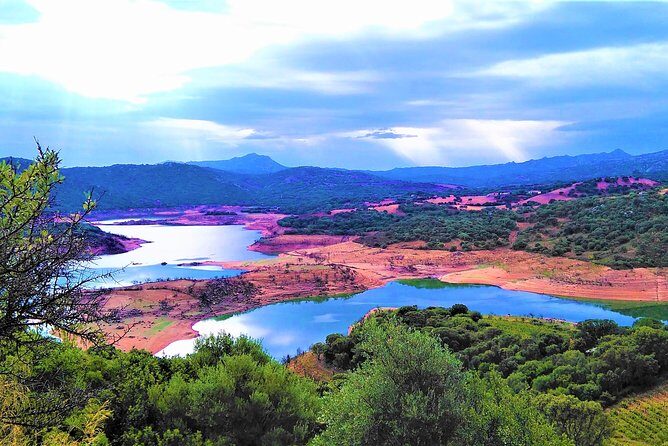
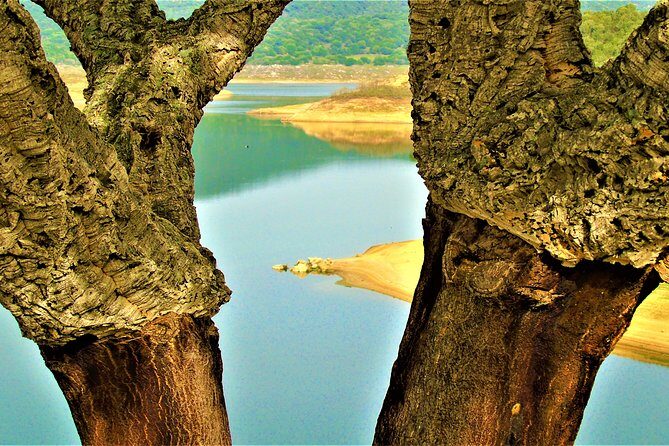
Lake Liscia is the kind of stop that resets your day. You get a panorama over the Valley of Cork—oaks and vineyards in the mix—and a clear sense of why Gallura matters on the island map. Sardinian cork is the real star here: this area is known for producing most of Italy’s cork supply, and that local detail helps turn a scenic lookout into something you understand.
Then there’s the mountain perspective. From here you can admire Monta Limbara, described as the second-highest mountain in Sardinia. Even if you don’t plan a hike, seeing that huge presence in your line of sight gives context to everything else you’ll do later in the day.
You’ll likely feel the “pause” effect, too. The lake is artificial, but the point is quiet—good for photos, a short breather, and getting your eyes adjusted to Sardinia’s light. Lake Liscia is listed as a free admission stop, and the time on-site is about 10 minutes, so it works well as a warm-up.
Practical tip: wear shoes you’re comfortable standing in. This is not a long nature walk stop, but you’ll want stable footing for photos and quick views.
Other Sassari and Castelsardo tours in Sardinia
The Olivastri Millenari in Luras: UNESCO-level age you can see
If you love plants, stone, or just the thrill of scale, the millennial olive trees in Luras are the highlight you didn’t know you needed. The tour brings you to Olivastri Millenari di Santo Baltolu, and it’s easy to get why it became protected.
This isn’t just an old tree. The plan describes one olive with a circumference of about 12 meters (measured at 1.3 meters height), a base diameter around 4.5 meters, and a crown spreading across roughly 600 square meters. Those numbers do help—but the best part is that you can look at it and instantly grasp that you’re standing in front of something older than most modern nations.
The olive is described as a UNESCO Natural Monument declared in 1991, and it’s also part of the group of 20 Italian secular trees protected for preservation. That matters because the tour isn’t treating this like a quick sightseeing check box. It frames the tree as a living landmark.
Time-wise, you’ll get around 30 minutes here. Optional entrance is listed as €2.50 per person, and that’s extra—so decide once you see how your group energy feels.
Practical tip: if you hate buying tickets on the fly, mentally decide ahead of time whether you want this one. It’s worth it for the photos and the scale alone.
Museo Etnografico Galluras: home life and the Femina Accabadora legend
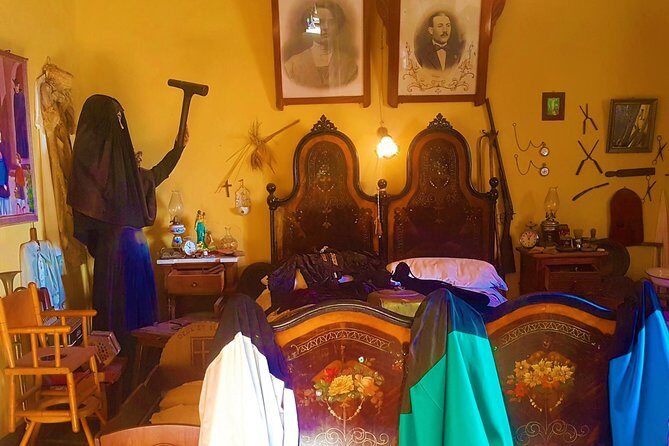
After the outside nature stops, the tour shifts indoors to a museum with a strong sense of place. Museo Etnografico Galluras, La casa della Femina Agabbadora is set in a typical house from north Sardinia, spread over three floors with rooms staged to reflect local life from the late 1600s into the first half of the 20th century.
What I like about this stop is how it turns folklore into something you can actually visualize. The legend centers on the Femina Accabadora, described as the Lady of the Good Death, and the museum connects the story to an ancient wooden humming tool used in the practice. Even if you’re not into dark legends, the museum’s approach is practical: it uses interior rooms and period-like settings to make the story feel tied to local culture rather than floating in abstract “myth” space.
One consideration: the topic is about euthanasia and death, even if presented as legend. So if you’re sensitive to that theme, you may want to mentally prepare before you enter.
The stop is about 30 minutes, and museum entrance is optional at €5 per person. If you choose not to pay, you’d miss the core experience, because the entire point here is the indoor storytelling.
Practical tip: bring a curious mindset, not a debate one. This is about culture and tradition as told through a local lens.
Tempio Pausania: granite streets, springs, and cork craft
Tempio Pausania is where the day broadens from “sites” into “town.” The stop is called Stazione di Tempio Pausania, but the experience is really about the city center feel: parks, springs, and that mountain air from Mount Limbara nearby. The tour describes Tempio as the city of stone, with a granite old town and stone paving that gives it a distinctly tactile look compared with softer-looking regions.
You also get that social Sardinia angle. The plan emphasizes strong traditions where families gather, food and wine matter, and sharing time is part of everyday life. Even in a short visit, you’ll feel that the town is built for conversation, not just passing through.
A fun cultural detail is Piazza Faber, dedicated to Fabrizio De André, the major Italian singer who lived outside the village. It’s the kind of plaque-and-square moment that turns a quick walk into something more meaningful.
And then there’s cork craftsmanship. The plan mentions local artists working with cork fiber to make dressings for a bride—the kind of detail that feels like craft knowledge passed down in plain sight. It also connects back to the cork theme from earlier in the day, so the stops link together instead of feeling random.
Time on-site is about 40 minutes, and this is a free stop in the plan. That’s a nice bonus: you get a meaningful town feel without adding another ticket.
Practical tip: bring a phone with a good camera setting. This is a “walk and frame” town, and the granite textures plus square angles give you lots of strong photo opportunities.
Nuraghe Majori: a stone tower you can picture living around
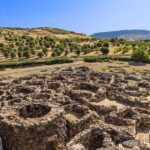
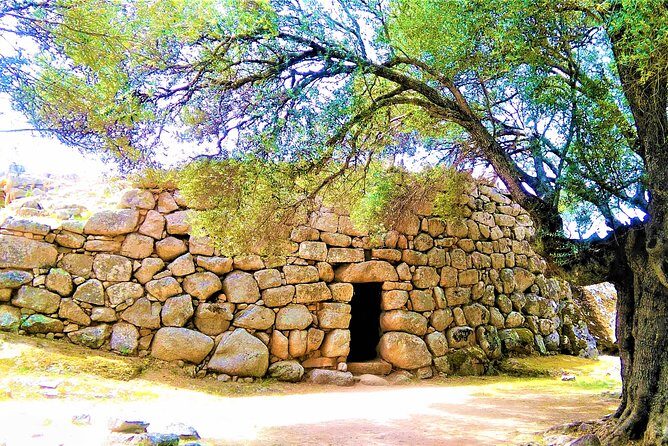
Now for the archaeological piece. Nuraghe Majori is a Nuraghe site—stone structures tied to Sardinia’s Nuragic civilization. The plan explains that the Nuraghi developed during the Middle Bronze Age, around 1600 BC, and lasted until the Carthaginians arrived in the 6th century BC.
What’s especially useful for your imagination here is the way the description is framed: there was a village around the Nuraghe, and daily life happened close to these stone huts. Even though the huts had roofs made from trunks and branches, you’ll be looking at the stone mass that survived. That gap is what helps you picture how people lived—stone for stability, perishable materials for everything else.
Nuraghe Majori is also described as having massive walls with minimal exploitation of space, plus smaller internal areas, which makes it appear squatter than the more famous tholos-type Nuraghi known for elegance and monumentality. In other words: this isn’t trying to look perfect for postcards. It reads as real and rough, which can be more satisfying when you’re trying to understand how these structures functioned.
The plan notes that the area hasn’t been affected much by excavations yet. That gives you a different feel than a heavily reconstructed site. You’ll get about 20 minutes here, and there’s an optional entrance listed at €3 per person.
Practical tip: if you like archaeology, bring your questions even for a short visit. A 20-minute stop is enough to orient yourself—then you’ll do the rest of the thinking as you move on.

Price and time: what you get for about $138.47
At $138.47 per person for about six hours, the value is mainly in the setup. You’re paying for transport with air-conditioning, and—big one—round-trip pickup from your accommodation. In places like this, the cost is often more about saving your energy than about saving money. If you’d otherwise rent a car, deal with parking, and design a route across multiple small stops, this format starts to look fair fast.
Also, the day is structured for variety without long travel stretches. Short stops mean you can see several types of Sardinia in one go: cork landscapes, ancient trees, a specific ethnographic legend, a granite town break, and a Nuraghe.
The main extra costs are optional entrances. Lake Liscia and the town stop are described as free. The olive tree stop lists a small optional fee (€2.50). The museum entrance is listed at €5. The Nuraghe entrance is listed at €3. Even if you pay all the optional fees mentioned, the total is still relatively small compared with the overall tour cost. The key is making sure you carry cash, since the plan states on-site payment for these entrances.
One more value signal: this tour caps at a maximum of 8 travelers. That small-group limit usually means you’ll have a better chance of hearing details, not just standing in line for photos.
The guide factor: lively storytelling makes the stops stick
This tour’s reputation is strongly tied to the energy of the people running it. Past groups praise a guide named Ivana for being cheerful, very informative, and even capable of singing. Another person mentioned is Luca, tied to a separate catamaran experience—but the takeaway for this land tour is that the operator seems to assemble staff who know how to keep a day from feeling like a checklist.
For you, the practical benefit is simple: good guiding turns short stops into lasting impressions. You’ll get context for why the cork matters, why the olive tree is protected, and how the museum legend fits into how locals understood life and death.
So if you’re booking with the goal of learning something real (not just collecting stamps), this is a strong bet.
Who should book this Gallura small-group tour
Book it if you want:
- A fast, organized taste of Gallura without renting a car
- Several photo-worthy stops across scenery, craft, town, and archaeology
- A guided day that’s educational but not exhausting
Skip it or be cautious if:
- You hate the idea of optional paid entrances during the day
- You don’t want any exposure to a death-related legend, even if it’s presented as tradition
This is a good match for couples, solo travelers who like small groups, and visitors who prefer their history explained in plain language. It also suits people who want to get out of the hotel and see more of Sardinia without turning the day into a navigation project.
Should you book? My take
I’d book this if your ideal Sardinia day includes pickup comfort, small-group attention, and a mix of cork-country nature plus culture and stone-age archaeology. The itinerary format makes sense: it starts with scenic calm, shifts to protected ancient trees, adds a culturally specific indoor museum, then rounds out with a granite town pause and a Nuraghe stop that helps you visualize older life ways.
The decision comes down to one thing: are you okay with optional paid entrances and cash on-site? If yes, this is solid value for a structured half-day that still feels varied. If no, you can still get a lot from the free stops, but the museum and Nuraghe are big parts of what makes the day feel complete.
FAQ
How long is the small-group tour?
It’s listed as about 6 hours.
What is the group size?
The tour has a maximum of 8 travelers.
Is pickup included, and where do they pick me up?
Yes. Pickup and drop-off are included, and pickup is from your hotel, apartment, B&B, villa, yacht, or cruise.
When does the tour start?
The start time is 8:30 am.
How will I know the exact pickup time?
The exact pickup time is confirmed the day before the excursion at 20:00 via mobile or email.
Is the tour offered in English?
Yes, it’s offered in English.
Is there an admission fee for the stops?
Some sites have optional entrance fees that are not included. In the plan, you’ll see optional fees listed for the olive tree area (€2.50), the ethnographic museum (€5), and Nuraghe Majori (€3). Lake Liscia and the town stop are listed as free.
Do I need cash for entrance fees?
Entrance fees for optional sites are described as paid in cash.
What’s included in the price?
Included features are the air-conditioned vehicle and pickup & drop-off.
What if I need to cancel?
Cancellation is free if you cancel at least 24 hours before the experience’s start time for a full refund. If you cancel less than 24 hours before, the amount paid is not refunded.