REVIEW · SARDINIA
Tuvixeddu Necropolis: the cult of the dead in Punic and Roman times
Book on Viator →Operated by Me and Sardinia · Bookable on Viator
Stone tombs on a hill make Cagliari feel timeless. I love how the guide makes the Punic necropolis feel like a real belief system, and I love the tight focus on the cult of the dead from Punic to Roman times.
One possible drawback: access takes some effort. If you’re relying on public transport, expect extra uphill walking, so choose the closest stop to Via Falzarego instead of assuming the bus drops you right at the entrance.
In This Review
- Key things I’d plan around
- Tuvixeddu necropolis: Cagliari’s hill of the dead
- Why the cult of the dead mattered here
- Rock-cut tombs: what you’re actually looking at
- Punic to Roman reuse: continuity you can notice
- Walking and getting there: plan for some uphill effort
- The guide experience: clear, local, and story-driven
- The 1 hour 30 minutes rhythm: enough time to understand
- Price and value: $27.76 for a focused, private lesson
- Who should book this tour?
- Quick FAQ for planning
- FAQ
- Where does the tour start and end?
- How long is the experience?
- Is this tour private?
- What ticket format do I receive?
- Is admission included?
- Do I get confirmation after booking?
- What happens if the weather is bad?
- Is free cancellation available?
- Should you book Tuvixeddu with Me and Sardinia?
Key things I’d plan around
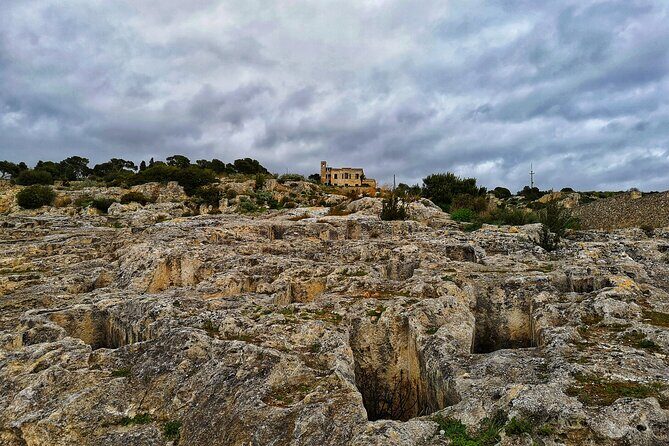
- Largest Punic necropolis in the Mediterranean: the scale is the first surprise.
- Rock-cut tombs: the burial spaces are carved entirely in the hill.
- Punic to Roman reuse: you’ll see how later Romans continued using an older sacred site.
- A focused 90-minute visit: enough time for meaning, not just photos.
- Local guide strengths: clear explanations, kind delivery, and story-driven context (Roberta is specifically praised when she leads).
- Weather matters: the visit depends on good conditions.
Tuvixeddu necropolis: Cagliari’s hill of the dead
Tuvixeddu sits on one of Cagliari’s seven hills, and it’s not just an archaeological site tucked away from real life. It’s a working reminder of how people once treated death as something tied to community, ritual, and place. The big headline is that this is the largest Punic necropolis in the Mediterranean, which gives the whole experience a sense of importance the moment you approach the rock.
Between the 6th and 3rd centuries BC, the Carthaginians chose this hill as a burial ground. They dug the tombs entirely in the rock, turning the landscape into a long-lasting memory. Later, the same site was reused in Roman times, so you’re looking at a timeline written directly into stone.
That combination is why this visit works. You’re not only looking at old structures. You’re watching continuity and change—how beliefs can leave behind the same space, used in different ways.
If you're still narrowing it down, here are other tours in Sardinia we've reviewed.



Why the cult of the dead mattered here
This tour is built around one core question: what role did the cult of the dead play in the Punic era, and what shifted as influence moved through Phoenician, Carthaginian, and Roman periods? Even without getting lost in heavy academic detail, you can feel what the theme is trying to teach: burial wasn’t random. It was part of a worldview.
On a hill like Tuvixeddu, choosing where to place tombs carries weight. A burial place is a public statement, even when the dead are gone. And because the tombs are carved into the rock, the commitment is physical and permanent—no quick burial decision, no temporary solutions.
I also like that the experience doesn’t treat the site as just “old.” It frames the necropolis as a ritual space. You come away thinking about how funerary customs can evolve while still keeping a thread of tradition.
Rock-cut tombs: what you’re actually looking at
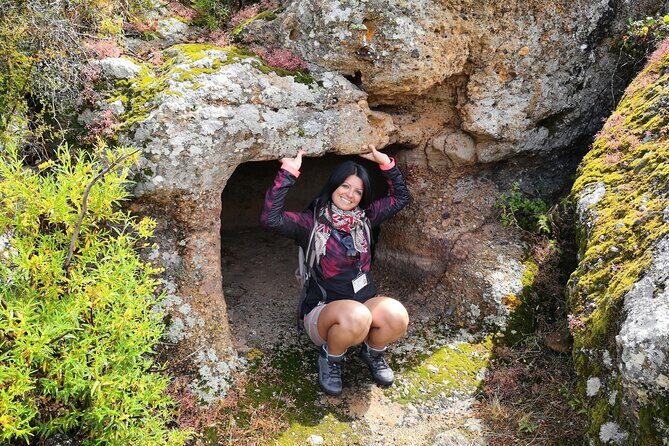
The standout physical feature here is simple: the tombs are dug into the rock. That matters because it changes the whole feel. Instead of freestanding monuments, you’re reading a structure that feels grown out of the hill itself. The stone becomes the container for memory.
At ground level, you’ll get a strong sense of how the hill was engineered into burial rooms. The carved forms create a layered experience—space, openings, and the way the hill holds everything together. It’s also the kind of site where a guide’s pacing helps. If you rush, it turns into shapes. If you slow down, it starts to look like a system of spaces designed for specific ritual use.
One more thing I appreciated: this is a single main site visit, so you stay with the theme. No hopping to a second stop that dilutes the story.
Punic to Roman reuse: continuity you can notice
Reused sites can feel confusing when you don’t know what changed. Here, the Roman reuse is part of the main story, not an afterthought. The tour is essentially asking you to compare how later Romans treated the necropolis after it had already been used in earlier Punic times.
You won’t need a PhD to get value from this idea. Even as a visitor, you can spot the point: the Romans didn’t erase what came before. They continued using the space. That suggests respect, practicality, or a deliberate choice to inherit sacred ground.
What makes this transition interesting is that it’s not purely a swap of one set of tombs for another. It’s an overlap in meaning—same hill, different cultural layers. The result is a site that helps you understand how beliefs can shift without breaking completely.
Walking and getting there: plan for some uphill effort
A small but real consideration: access isn’t completely flat. One of the practical issues people run into is bus routing. Some bus options can leave you walking more than you expect, while a different route may stop closer to your starting area on Via Falzarego.
So here’s my advice. When you look up transit, check which stop puts you nearest to where you’ll actually meet. If you land farther away, expect uphill walking. In a 90-minute experience, that time adds up.
Good news: the site is near public transportation, so you’re not stuck with a long transfer. Just don’t treat it like a “bus pulls up, doors open, you’re there” kind of stop.



The guide experience: clear, local, and story-driven
The biggest praise for this tour experience is the guide quality. Explanations are described as clear, and the approach is gentle and human. That matters more than it sounds. A necropolis can easily become a silent museum of stone. A good guide keeps it connected to people and practices—without turning it into fantasy.
If you get Roberta, she’s specifically praised for being prepared and for loving her land in a way that actually comes through. People highlight her passion, her ability to explain clearly, and even her knack for using anecdotes, curiosities, and legends to help a past era feel real.
And even when the guide isn’t Roberta, the pattern is consistent: strong organization, prepared speaking, and a friendly tone. If that’s your style of tour—practical facts plus a narrative thread—you’ll likely appreciate how this one is paced.
The 1 hour 30 minutes rhythm: enough time to understand
This visit runs about 1 hour 30 minutes. That timing is a sweet spot for sites like this. You’ll have enough time to absorb the theme—Punic burial practices and the later Roman reuse—without spending the whole day chasing details.
With one main stop, the session tends to move at a steady pace. You can focus on comprehension instead of logistics between locations. And because the setting is the necropolis itself, the walking doesn’t feel like “travel time.” It feels like part of the learning.
If you’re the kind of person who likes reading every plaque, you might want to budget a bit of extra patience. But if you prefer guided meaning over solo wandering, 90 minutes is usually right on target.
Price and value: $27.76 for a focused, private lesson
At $27.76 per person, the value depends on what you want. If you just want a quick photo, you’d probably question the spend. But if you want context—why these tombs matter and how the Punic and Roman layers connect—this price starts to make sense fast.
A private format helps too. You’re not sharing a tight story with a crowd moving in different directions. That can be a big deal at a site where the details are on the rock and the meaning comes from explanation.
Also, the necropolis stop is listed with an admission ticket included, and you receive a mobile ticket. So you’re paying for the guided experience plus access, not just a generic walking circuit.
Who should book this tour?
This works especially well if you:
- like Roman and Punic-era sites but want more than “what year was it built”
- enjoy death-and-ritual history as a lens on culture
- prefer a private experience focused on one place
- want a solid 90-minute plan in Cagliari without overbuilding the day
It may be less ideal if you want fully flat terrain or if you dislike walking uphill. The site’s access needs a bit of stamina planning.
Quick FAQ for planning
FAQ
Where does the tour start and end?
The start point is Via Falzarego, 09123 Cagliari CA, Italy. The activity ends back at the meeting point.
How long is the experience?
It’s about 1 hour 30 minutes (approx.).
Is this tour private?
Yes. It’s a private tour/activity, and only your group participates.
What ticket format do I receive?
You receive a mobile ticket.
Is admission included?
The necropolis stop is listed with an admission ticket free.
Do I get confirmation after booking?
Yes. Confirmation is received at the time of booking.
What happens if the weather is bad?
The experience requires good weather. If it’s canceled due to poor weather, you’ll be offered a different date or a full refund.
Is free cancellation available?
Yes. You can cancel up to 24 hours in advance for a full refund.
Should you book Tuvixeddu with Me and Sardinia?
I’d book it if you want Cagliari history that actually connects to belief, not just stone shapes. The combination of rock-cut Punic tombs, the largest Punic necropolis in the Mediterranean scale, and the Punic-to-Roman reuse theme makes this more than a quick sightseeing stop.
Just go in knowing the practical reality: access can involve uphill walking, and the timing is short enough that you’ll feel every detour. If you’re comfortable with that, you’ll get a strong, focused lesson in how the cult of the dead left its mark on Sardinia.