REVIEW · SARDINIA
Alghero: walking tour with bilingual local guide
Book on Viator →Bookable on Viator
Follow the walls of old Alghero. This English-speaking walk strings together the key places you’d otherwise miss on your first pass, with a local guide explaining what shaped the town: Charles V’s stopover, Catalan influence, and the story told by its towers and walls. It’s built to fit neatly into a day of Sardinia sightseeing, with morning or evening times.
I especially like the small group size (up to 10), because it keeps questions easy and the pace comfortable. I also like the tight “hit the essentials” route, moving from Piazza Civica to the Cattedrale di Santa Maria and into the Quartiere Ebraico without dragging you across the city.
One thing to plan for: the tour requires good weather. If it gets canceled due to poor conditions, you’ll be offered another date or a full refund.
In This Review
- Key highlights you’ll care about
- Why This Alghero Old Town Walk Works So Well
- Price and value: what $36 buys you (and what it doesn’t)
- Meeting point and how the walk is paced
- The route, stop by stop: what you should notice
- Piazza Civica: where Charles V’s overnight mattered
- Cattedrale di Santa Maria: a cathedral built across centuries
- Quartiere Ebraico: North-Sardinia’s former Jewish quarter
- Torre di San Giacomo and the fifteenth-century walls
- Via Carlo Alberto: finding the old streets that connect everything
- Torre dell’Espero Rejal: the tall tower you’ll remember
- Torre di Porta Terra: the fortress entrance story
- The guide: what you should look for during the talk
- Small group dynamics: how to make the most of a 90-minute window
- Who this tour fits best
- Weather, walking, and the one real catch
- Should you book this Alghero walking tour?
- FAQ
- How long is the Alghero walking tour?
- Is the tour available in English?
- How many people are on the tour?
- Where does the tour start?
- Do you pay admission to see the stops?
- What happens if the weather is bad?
Key highlights you’ll care about
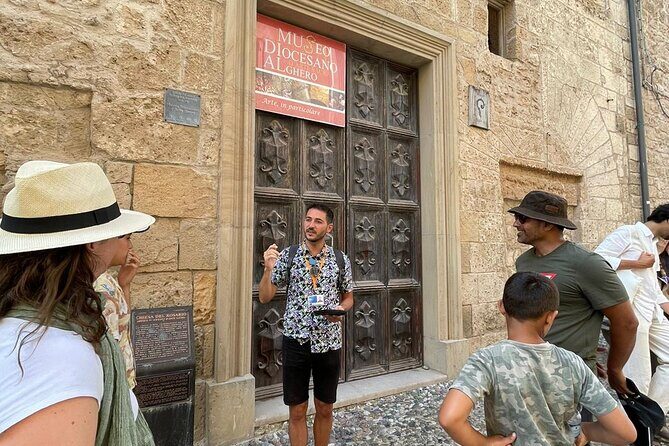
- A small group that feels personal: max 10 people, not a big herd.
- First-timer friendly route: major landmarks plus the back-street connections.
- Jewish quarter context: the Quartiere Ebraico and how it changed over time.
- Towers and walls as the “theme”: you’ll see how Alghero defended itself.
- Built-in break time: there’s a coffee/toilette stop so you don’t scramble mid-walk.
- Guide adds practical food ideas: extra restaurant suggestions can help you plan dinner.
Why This Alghero Old Town Walk Works So Well
Alghero is one of those towns where it’s easy to wander… and also easy to miss the big clues. This walking tour is designed to fix that. In about 1 hour 20 minutes to 1 hour 40 minutes, you get a guided read on the old town’s structure, not just a list of sights.
That matters because Alghero’s charm comes from layers. You’ll see medieval-era power (think Charles V), then later architectural mix, and then the influence of rulers from across the Mediterranean. When you understand that “why,” the streets start making sense. You’ll also come away with a simple mental map, so you can keep exploring on your own afterward.
Other Alghero and Porto Conte tours in Sardinia

Price and value: what $36 buys you (and what it doesn’t)
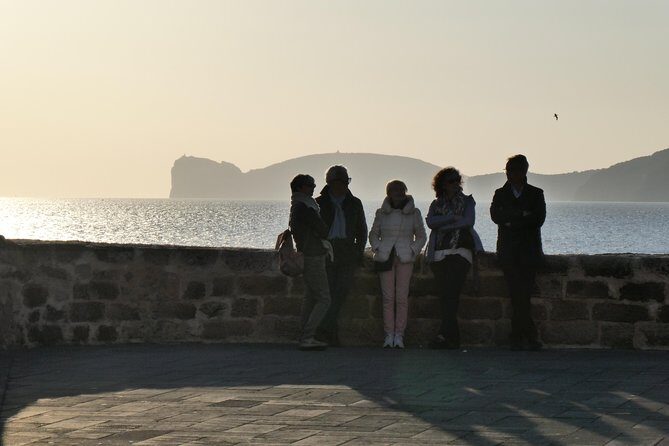
At $36.04 per person, this isn’t a bargain tour where you get rushed and forgotten. The value comes from three practical things that travel days often lack:
First, the route is tight and efficient. You’re not paying for long transit or waiting around—your time is spent at meaningful stops.
Second, the group stays small. A max of 10 travelers means you can ask questions, and the guide can adjust the pace.
Third, the stops are the kind you can’t easily “self-explain” from the sidewalk. Even when the entrances are free, interpretation is what turns them from pretty buildings into a story you can retell.
One caution: because the emphasis is on walking and viewpoints, it’s not meant for a super-slow stroll with lots of stand-and-stare time. If you like to linger at every corner, you’ll want to build in extra free time after the tour.
Meeting point and how the walk is paced
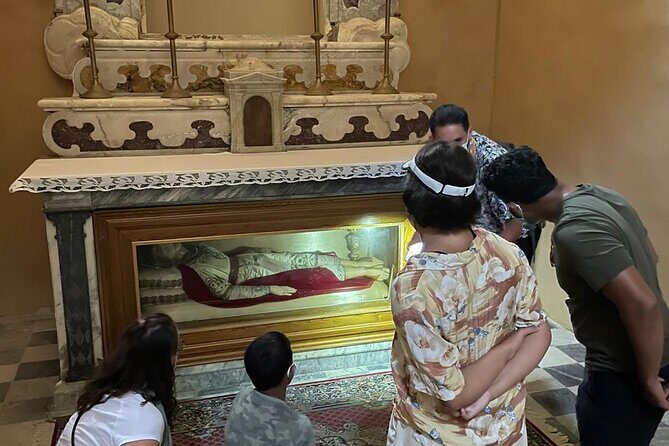
The tour starts at Scalo Tarantiello, 07041 Alghero SS, Italy, and ends back near the meeting point. That’s a relief, because you’re not left figuring out transportation right after you’ve done the main old-town circuit.
Timing is also clear: each stop is short—often around 10 to 15 minutes—so the tour keeps momentum. There’s also a coffee break/toilette window (not mandatory) to reset your day. That little buffer is more useful than it sounds, especially if you’re planning dinner right after.
The route, stop by stop: what you should notice
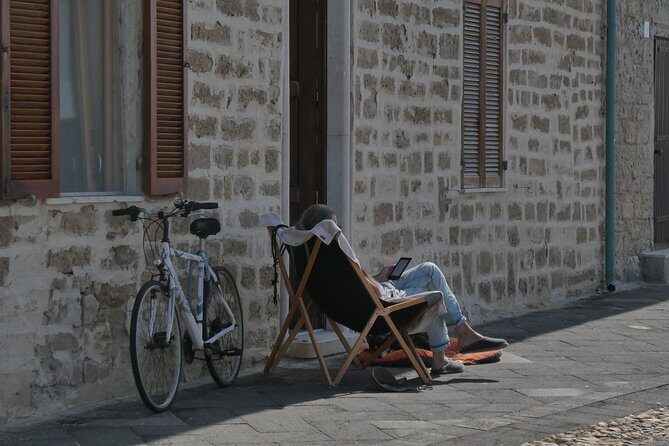
This tour follows a logical sequence through Alghero’s most recognizable historic areas. Here’s what each stop does for you and what to look for.
Piazza Civica: where Charles V’s overnight mattered
You’ll begin at Piazza Civica, the main square during and after the Middle Ages. The big fact to keep in mind here is that Emperor Charles V stayed overnight. That single detail changes how you see the square. It wasn’t just local life happening around it—this was a place that mattered to power.
What to watch for: the square’s position as the town’s social center, and the way the streets radiate outward from it. After the tour, you can use this as your “anchor” point for self-guided wandering.
Small drawback: if you’re hoping for dramatic views from the first minute, you might feel the first stop is more informational than scenic. But that’s the point—it sets the context.
Other Cagliari walking tours in Sardinia
Cattedrale di Santa Maria: a cathedral built across centuries
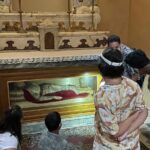
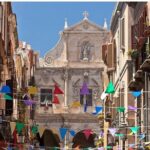
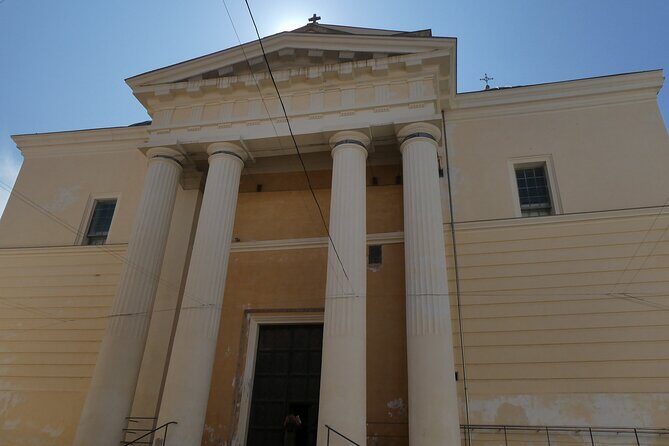
Next is Cattedrale di Santa Maria, where you’ll see a mix of styles between the 15th and 18th centuries. That span is the key. You’re not looking at one “period look.” You’re looking at a building that reflects changing tastes and changing times.
What to notice: how the structure reads as layered—different parts don’t feel like they were built for the exact same moment in history. The guide’s job here is to help you spot those contrasts without turning it into a textbook.
Why it’s worth your time: cathedrals can be impressive but forgettable if you don’t know what you’re seeing. This stop gives you a simple framework for understanding the mix.
Quartiere Ebraico: North-Sardinia’s former Jewish quarter
One of the most interesting stops is the Quartiere Ebraico, described as the only former Jewish quarter of North-Sardinia. You’ll hear how there was once a synagogue and a cemetery, and how those spaces became Catholic buildings later.
That transformation is the kind of historical shift that’s hard to grasp just from signage. With a guide, you start reading the area differently—less like a collection of old walls, more like a map of community life that changed under new rule.
Historical context to listen for: the fact that some historical buildings of Jewish families are still visible during the time of Catalan domination. That Catalan connection is important because it ties Alghero’s identity to broader Mediterranean history.
Practical tip: be ready for this stop to feel more interpretive than scenic. It’s still one of the best places on the walk because it adds meaning.
Torre di San Giacomo and the fifteenth-century walls
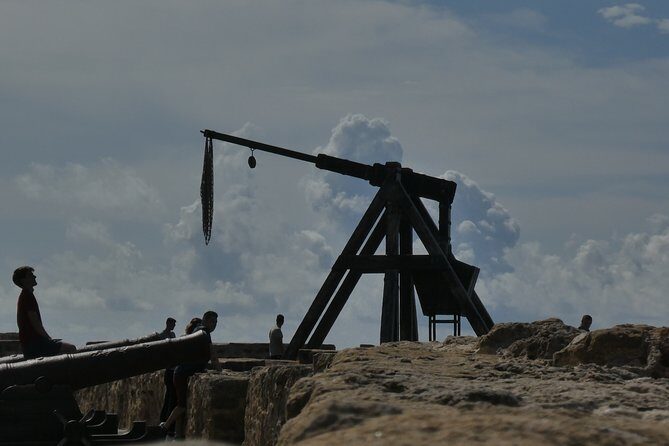
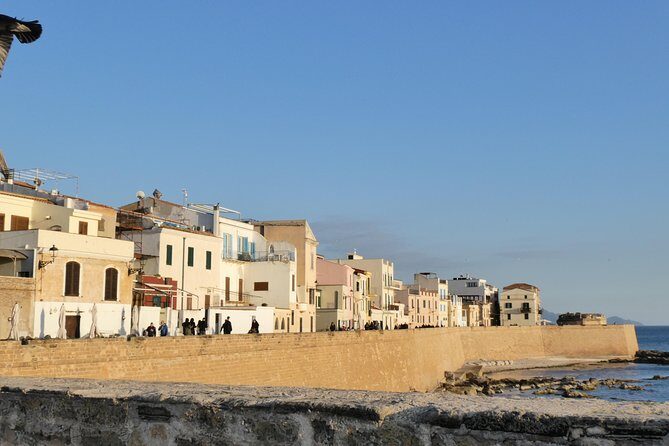
Then you’ll move into the defensive story with Torre di San Giacomo and the historic walls dating to the fifteenth century. This is where Alghero shifts from “pretty old town” to “strategic fortress city.”
What to notice: how the walls define the town’s edge. Even without climbing anything, you can understand the logic of the fortifications—where protection mattered and how the town grew around the defensive perimeter.
Via Carlo Alberto: finding the old streets that connect everything
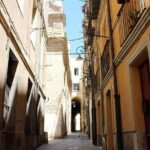
After the short pause for coffee or a quick toilet break, you’ll head into Via Carlo Alberto for hidden streets of the old town. This section is valuable because it’s where you start to feel how locals would actually move through the historic center.
The tour keeps this part short (about 10 minutes), but it’s enough to change your future wandering. Once you’ve seen these lanes with guidance, you’ll feel confident navigating back later.
What to expect: narrow streets, quick turns, and the sense that the town is built for walking, not driving. Wear shoes you trust.
Torre dell’Espero Rejal: the tall tower you’ll remember
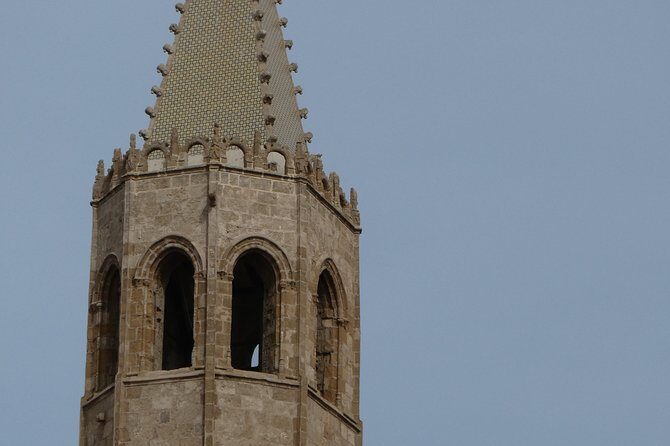
Next is Torre dell’Espero Rejal, one of the tallest towers in the old town, about 10 meters tall. It’s a clear landmark for understanding the vertical shape of the city’s defenses.
Why this stop clicks: even if you don’t know the technical defense details, you can visually connect height, visibility, and control. Towers weren’t decorative. They were functional.
Torre di Porta Terra: the fortress entrance story
Finally, you’ll reach Torre di Porta Terra, described as the former and only entrance to the fortress, dating back to the fourteenth century. That “former and only” detail is the kind of thing that sticks with you because it implies a single choke point.
What to do here: slow down for a moment and imagine movement through the entrance. Then notice how this tower sits within the broader walls-and-towers line. Your brain starts turning the town into a diagram.
The guide: what you should look for during the talk
The tour is offered with a bilingual local guide, and it’s in English. A good sign is the way the guide blends history with practical advice—especially restaurant recommendations.
In one standout example, the guide Kevin is praised for being friendly and easy to talk to, with interesting facts that go beyond names on plaques. The same guests also mention he suggested great places to eat, which is exactly what you want from a short tour: useful info you can use the same day.
If your guide is the talkative type, ask quick questions. Don’t worry about sounding “basic.” The whole format is made for first-timers getting their bearings fast.
Small group dynamics: how to make the most of a 90-minute window
With up to 10 travelers, you’ll likely experience a tour that stays conversational rather than lecture-style. Still, you can help it go even better.
Bring a phone for quick photos, but don’t hide behind it. The guide’s best points are usually in the “look here, then notice that” moments. If you’re constantly filming, you’ll miss those visual cues.
Also, decide in advance how you want to use the break. If you’re finishing the tour and heading to dinner, you’ll appreciate using the coffee/toilette window well. If you don’t care about coffee, you can treat it as a reset and still get back in sync quickly.
Who this tour fits best
This is a great match if you:
- are visiting Alghero for the first time and want a fast orientation,
- like history explained in normal language, not heavy academic detail,
- want a day activity that lands you near the main old-town sights,
- prefer a small group rather than a big bus-style shuffle.
It’s also ideal as a before-dinner plan. The tour ends back at the start area, which helps you keep your evening flexible.
Weather, walking, and the one real catch
The tour requires good weather. If it gets canceled due to poor conditions, you’ll be offered another date or a full refund. That’s not a dealbreaker, but it’s a reminder to watch the forecast and bring layers.
And yes, you’re walking. Plan for compact distances and uneven old-street surfaces. This is not a sit-down museum hour.
Should you book this Alghero walking tour?
If you want an easy way to understand Alghero’s old town without spending hours piecing it together on your own, I think this tour is worth it. The price is fair for the time, the small group size, and the fact that the guide helps you connect the dots between squares, cathedrals, Jewish history, and the fortification towers.
Book it especially if you’re the type who likes to wander more effectively afterward. The walking route gives you both context and direction—then you can go enjoy dinner and keep exploring with your new map in your head.
FAQ
How long is the Alghero walking tour?
It runs about 1 hour 20 minutes to 1 hour 40 minutes.
Is the tour available in English?
Yes. The tour is offered in English.
How many people are on the tour?
The group size is limited to a maximum of 10 travelers.
Where does the tour start?
The tour starts at Scalo Tarantiello, 07041 Alghero SS, Italy, and it ends back at the meeting point.
Do you pay admission to see the stops?
The stops listed are free to enter.
What happens if the weather is bad?
If the tour is canceled due to poor weather, you’ll be offered a different date or a full refund.