REVIEW · SARDINIA
3 Hours Guided Tour of the Historic Districts of Cagliari
Book on Viator →Operated by Talis · Bookable on Viator
Cagliari’s neighborhoods link like a story. This 3-hour guided walk strings together fortifications, cathedrals, and church squares across four districts, so the city feels connected instead of random. I also love the way the tour uses historical photos to make older layers of Cagliari easier to picture, even when you’re standing at modern streets.
Two things are doing the heavy lifting here: clear, English-friendly guiding and that photo support that keeps the “why” attached to the “what.” The only real consideration is logistics: you’re moving on a set schedule, with about 45 minutes per area, so comfortable shoes and a moderate walking level matter.
In This Review
- Key takeaways
- Why this Cagliari walk works: four neighborhoods in three hours
- Quartiere Castello: fortifications, San Pancrazio, and the Cathedral of Sante Maria e Cecilia
- Villanova: flowered streets and the churches of San Giacomo and San Domenico
- Stampace and via Roma: churches close by, plus a town hall with a “European” imprint
- Marina: narrow lanes from Roman times, and two churches tied to long timelines
- The guide’s role: how names like Valentina and Majid turn stones into a story
- Price and value: $72.01 for 3 hours, photo help, and no museum add-ons
- Getting ready: what to wear, how to pace yourself, and when weather matters
- Best fit: who should book this Cagliari historic districts tour
- Should you book this Cagliari historic districts tour?
- FAQ
- What’s the duration of the guided tour?
- How much does the tour cost?
- Where does the tour start and end?
- What language is the tour offered in?
- How many people are in the group?
- Is there a museum included in the price?
- What’s included besides the guide?
- Are any admission tickets required?
- Is the tour suitable for people with moderate mobility?
- What if the weather is poor?
- Is there free cancellation?
Key takeaways
- Four districts in one loop: Castello, Villanova, Stampace, and Marina, all in about three hours
- Photo-led context: historical images help you see what’s changed (and what hasn’t)
- English guiding, small group: offered in English, with a max of 15 travelers
- Major sights without museum tickets: churches and viewpoints along the way, but no museum admissions included
- Expect stone-and-street time: narrow medieval lanes and exterior looks like the Elephant tower
Why this Cagliari walk works: four neighborhoods in three hours
Cagliari can feel big when you first arrive. This tour solves that by giving you a tight route that connects the city’s old neighborhoods into one story arc, instead of sending you off to chase individual landmarks.
The pacing is practical. You spend roughly 45 minutes in each district, then you’re on to the next. That keeps the tour from dragging, but it also means you won’t have unlimited time to linger in one spot.
I also like the group size. With a maximum of 15 people, you get more back-and-forth than you’d in a huge coach tour, and the guide can keep track of everyone.
And yes, you’re on your feet. The tour lists a moderate physical fitness level, so plan for a steady walking pace over uneven, older streets.
Other Cagliari tours and city experiences in Sardinia


Quartiere Castello: fortifications, San Pancrazio, and the Cathedral of Sante Maria e Cecilia
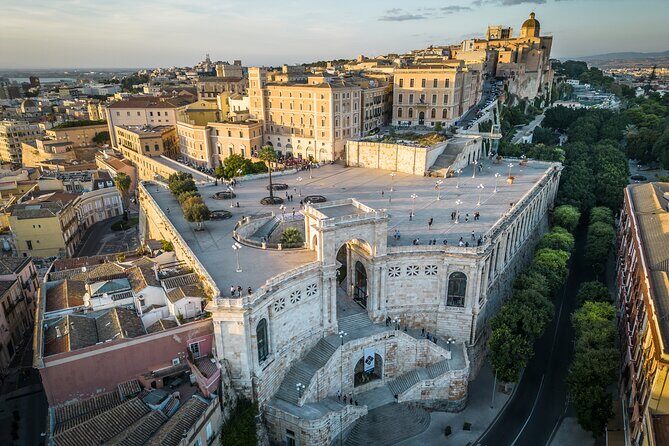
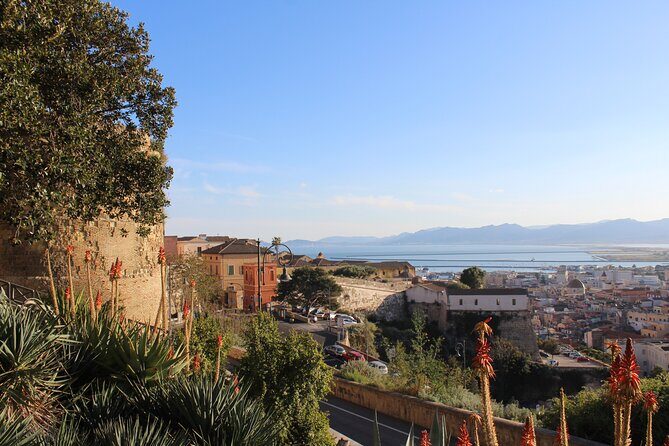
Castello is where you go to understand Cagliari’s defensive mindset. Here you’ll walk the medieval lanes while the guide points out Pisan and Spanish fortifications, which is the kind of detail that turns a wall into a timeline.
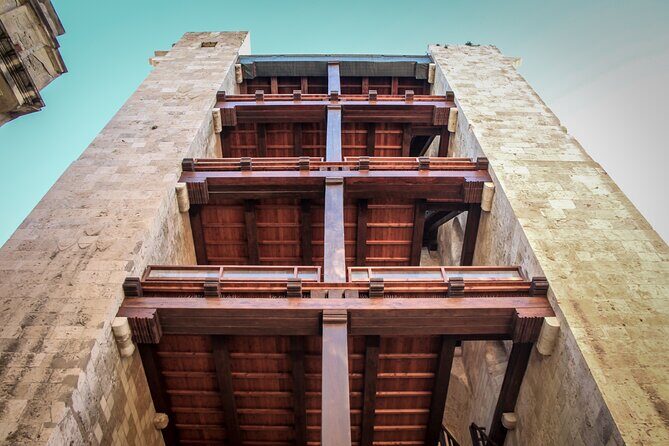
You’ll also see the tower of San Pancrazio, plus the Elephant—dating to the early 14th century—visited from the outside. An exterior look matters because it sets your expectations: you’re learning the structure and its role in the landscape, not buying a museum ticket to get the story.
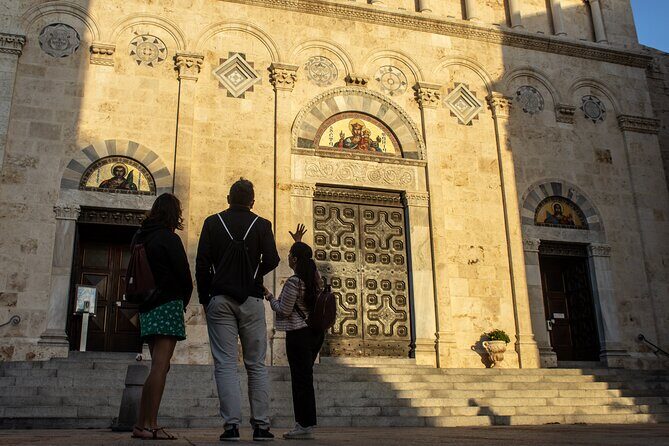
From there, the tour shifts from defense to faith and civic power. You’ll visit the Cathedral of Sante Maria e Cecilia, covering a span from the 13th century through later renovations, plus the basilica and the Bastion of Santa Croce from the 16th century.
If you like cities where power left physical fingerprints, Castello is the best place to start. You come out with a sense of how empires shaped the skyline and how Cagliari defended itself while staying culturally connected.
One more practical note: this is a walking neighborhood. Pack for it—comfortable shoes and a light layer help—because Castello’s streets don’t feel made for quick stops and platform-style sightseeing.
Villanova: flowered streets and the churches of San Giacomo and San Domenico
Villanova feels different the moment you arrive. Instead of the heavy fortress tone, you get a more everyday neighborhood rhythm—squares, churches, and streets that people pass through as part of normal life.
You’ll focus on two religious landmarks that anchor the area’s identity: the square and the church of San Giacomo from the 14th century, then the square and church of San Domenico from the 15th century. The value here isn’t just the age of the buildings; it’s how the spaces work as social stages.
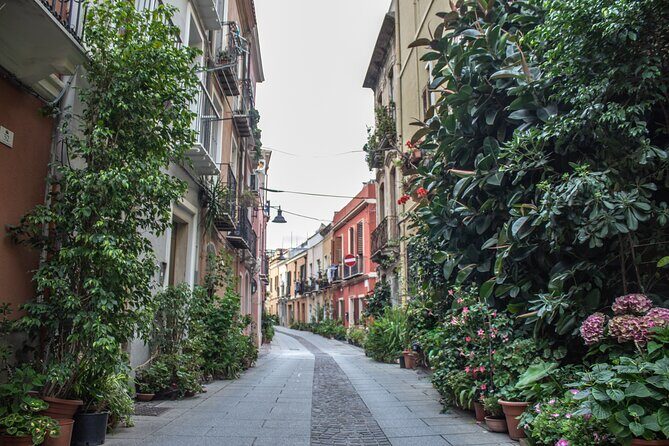
This is also where your guide’s narrative becomes practical. You’ll walk the streets decorated with flowers and hear how religious traditions and local rituals shape neighborhood identity. That’s the kind of context that helps you notice what you’d otherwise miss—like why certain squares feel like meeting points, not just postcard backdrops.
The drawback? Villanova is best enjoyed at walking pace. If you’re expecting a high volume of major monuments in a compact block, you might want more time here than the tour allows. Still, for an introduction to the city’s social map, it does the job.
Stampace and via Roma: churches close by, plus a town hall with a “European” imprint
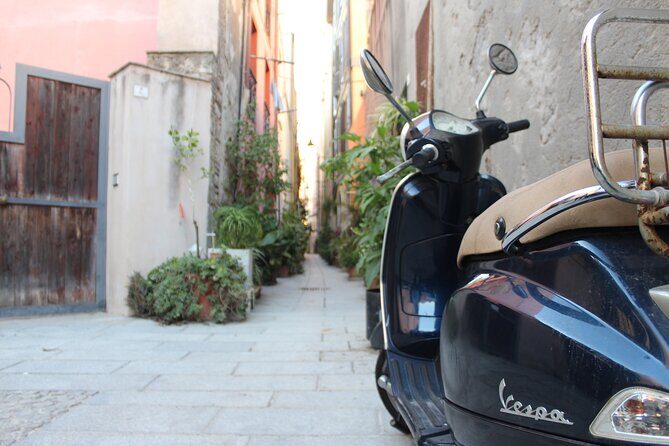
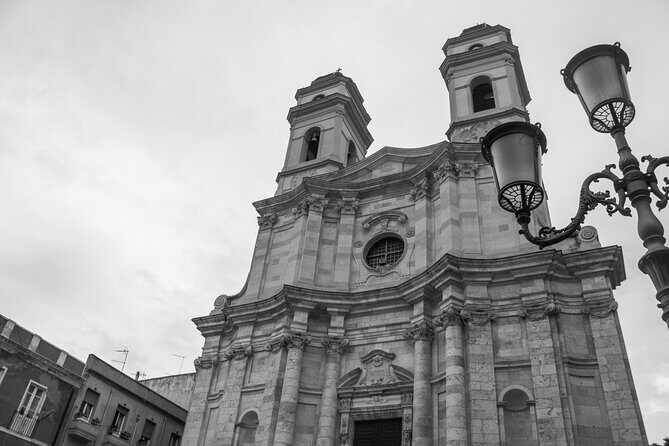
Stampace gives you an efficient cluster of church stops, all relatively close together. You’ll see Sant’Anna (18th–20th century), San Michele (17th–18th century), and Sant’Efisio (16th century) along the way—so you can compare styles and eras without constantly changing neighborhoods.
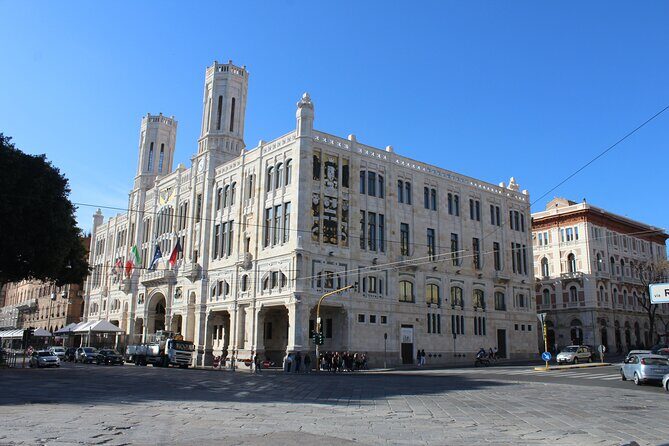
This district also adds civic architecture. You’ll spot the Town Hall built between the late 19th and early 20th century on via Roma, an important artery designed during the same period to give the city a more European urban look.
That blend is useful. It prevents the tour from becoming “church, church, church” with no larger framing. Instead, you start to see how religious life and civic planning moved side by side as Cagliari grew and modernized.
If you’re a first-time visitor, Stampace is a great mid-tour section because it balances old faith landmarks with a citywide perspective. You learn to read via Roma not just as a street, but as a design choice.
Marina: narrow lanes from Roman times, and two churches tied to long timelines
Marina is where Cagliari feels cosmopolitan. You’ll walk along narrow streets that run lengthwise through the district and you’ll hear how the area has hosted people from different regions and states since Roman age.
Two sites anchor the story here. First is the remains of the church of Santa Lucia (12th–17th century), then the church of Sant’Eulalia (14th–20th century). The way you learn about these spots is key: your guide connects how a place can last, change, and fragment over centuries.
This is also a good district to come to if you like real street energy. Marina isn’t frozen in time; it feels lived in. That makes it easier to imagine how older structures fit into everyday movement.
Like Castello, this section is still about walking and observing more than museum-style inside access. If you’re hoping for a lot of indoor time, you’ll want to plan separate museum visits on another day, since admission to museums is not included.
Other guided tours in Sardinia



The guide’s role: how names like Valentina and Majid turn stones into a story
What makes this tour consistently work is the way the guide explains connections between periods. In the hands of guides such as Valentina and Majid, the tour becomes more than a list of buildings.
You’ll get the big picture: how different powers shaped Sardinia and Cagliari, and how that mix shows up in structures and traditions. One highlight is the explanation of how Roman, Catalonian, and Piedmontese influences can feel baked into the city—so you understand why details look the way they do.
The guides also tend to handle pacing with care. The tone from past groups has been about being attentive to everyone and keeping the walk comfortable, even for families. One family described the tour as adjusted to their situation, including a 7-year-old and an 8-month-old, which tells me this is not an all-business, march-in-a-straight-line kind of experience.
Language is another practical point. This tour is offered in English, and the guide experience described in feedback emphasizes clarity and ease of understanding. If you want a city introduction without struggling through cultural context, that matters.
Finally, don’t underestimate the historical photographs included with the tour. When a building is partly ruined or transformed, photos help you connect the current scene to earlier versions. It’s one of those “why doesn’t every tour do this” upgrades.
Price and value: $72.01 for 3 hours, photo help, and no museum add-ons
At $72.01 per person for about three hours, this isn’t a bargain tour. But it’s also not a luxury one. It’s priced like a focused guided introduction, and that matters because it’s built around a dense route.
Here’s where you get value for your money:
- You’re paying for a guide who explains the connections between districts, not just guiding you from A to B.
- You get historical photographs to support what you’re seeing.
- The group stays small, with a max of 15 travelers.
- You don’t have to budget museum admissions for this specific experience.
What you shouldn’t expect: museum time. The tour notes that museums aren’t part of what’s included, so if your idea of a perfect outing is door-after-door inside attractions, you’ll want to pair this with at least one museum visit later.
Also, the Elephant is listed as an external visit. That’s not bad—it just tells you where your time is going. This is a street-and-structure tour, not a ticket-to-ticket day.
Getting ready: what to wear, how to pace yourself, and when weather matters
Since the tour requests moderate physical fitness, plan like you would for a brisk walk through old city streets. Comfortable shoes are the obvious choice, and if you’re sensitive to uneven paving, take extra care around corners and slopes.
The meeting point is Piazza Giacomo Matteotti in Cagliari. The tour starts there and ends back at the same place. That makes planning your day easier, since you’re not stuck figuring out transit at the end.
Bring a phone for the mobile ticket. Service animals are allowed, and the meeting area is near public transportation, so you can usually reach it without complex logistics.
Weather matters too. The experience notes that it requires good weather, and if it gets canceled due to poor conditions, you’ll be offered a different date or a full refund. So yes, keep a flexible plan for that day.
Best fit: who should book this Cagliari historic districts tour
This works especially well if:
- You’re visiting Cagliari for the first time and want fast orientation.
- You like history explained in plain terms, connected to buildings you can actually see.
- You want a structured walk that still feels like wandering with a local expert.
It also fits families in some cases. Past feedback included a family traveling with both an older child and a baby, and they described the tour as adjusted to their needs. Still, use your own judgment based on your child’s comfort with walking and the neighborhood streets.
If you’re a museum-only type, this may feel too outside-focused. On the other hand, if you enjoy churches, fortifications, and city streets that show multiple eras side by side, you’ll likely find it a strong first step.
Should you book this Cagliari historic districts tour?
I’d book it if you want a guided “city map in motion.” In three hours you get a clear sense of how Castello, Villanova, Stampace, and Marina fit together, and you leave with explanations that make later wandering easier.
Skip it (or add a different plan) if you want long museum visits or lots of interior access, because the tour is designed around a walking circuit and you’re not buying museum tickets as part of the deal.
If you’re deciding between doing nothing and doing one guided outing, this is one of the more practical choices. You’ll come away understanding what to look for when you’re on your own—tower details, fortress remnants, church squares, and that “why does this area feel different” feeling between districts.
FAQ
What’s the duration of the guided tour?
It lasts about 3 hours.
How much does the tour cost?
The price is $72.01 per person.
Where does the tour start and end?
It starts at Piazza Giacomo Matteotti in Cagliari and ends back at the same meeting point.
What language is the tour offered in?
The tour is offered in English. Guided tour is also available in Italian Sign Language (LIS).
How many people are in the group?
The maximum group size is 15 travelers.
Is there a museum included in the price?
No. Museums and any museum visits not included in the itinerary are not included.
What’s included besides the guide?
Historical photographs are included to support the tour.
Are any admission tickets required?
The itinerary notes admission ticket free for each stop, and the Elephant is listed as an external visit.
Is the tour suitable for people with moderate mobility?
The tour requires moderate physical fitness, so plan for walking.
What if the weather is poor?
The experience requires good weather. If it’s canceled due to poor weather, you’ll be offered a different date or a full refund.
Is there free cancellation?
Yes. You can cancel up to 24 hours in advance for a full refund. If you cancel less than 24 hours before the start time, the amount paid is not refunded.