REVIEW · SARDINIA
Cagliari: Nora Archaeological Site Private Experience from Chia
Book on Viator →Operated by Bitan Daily Tours · Bookable on Viator
Nora is where Sardinia’s ancient ports feel real. This private trip from Chia pairs a guided walking tour through Nora’s Phoenician-Punic-Roman remains with skip-the-line priority admission, so you spend less time stuck at the entrance and more time seeing the site. I especially like that you’re not just dropped off at ruins; you get a human guide to connect the dots, from early Phoenician life to later Roman rebuilding.
You’ll also enjoy the rhythm of the day: a short drive from the coast, a solid couple of hours on the ground at Nora, then time in Pula for alleys, craft shops, and classic southern Sardinia atmosphere. One consideration: Nora is a walk-focused archaeological park, so if you’re sensitive to uneven ground or warm weather, plan for comfortable shoes and water.
In This Review
- Key Points You’ll Care About
- Nora From Chia: What Makes This Tour Work
- Getting There: Chia to Nora Without the Stress
- Walking Nora: Phoenician, Punic, and Roman in One Clear Route
- Nora’s port identity and why it grew
- The excavations you’ll hear about at the start
- Thermal baths and the feel of the old streets
- Don’t miss the mosaics (and yes, there’s a specific one)
- The amphitheater and what it’s used for now
- Sanctuary of Aesculapius: the last major stop
- A note on the coast and snorkeling pointers
- Admission Priority: Why It Matters More Than You Think
- Pula After Nora: Short, Sweet, and Very Real
- The Chia Return Stop: Closing the Loop
- Price and Value: Is $479.41 a Good Deal?
- What to Pack and How to Get the Most From the Walk
- Who This Tour Suits Best
- Should You Book This Nora Experience?
- FAQ
- How long is the Nora archaeological site private experience?
- What’s included in the tour?
- Is the admission ticket included?
- Do you offer pickup from hotels?
- Where does the tour start and end?
- Is this tour private?
- What group size is this priced for?
- What language is the tour offered in?
- Is there Wi‑Fi on the transport?
- Is the tour canceled if it rains?
- Book this guide?
Key Points You’ll Care About
- Priority admission helps you avoid long waits at the Nora entrance
- A guided walking route through key zones like the forum area, amphitheater, and sanctuaries
- Private transport from the Chia and Domus de Maria area keeps the day efficient
- Time to add Pula (1 hour) after the ruins, without rushing
- The Nora story spans Phoenician (8th century BC) to Roman and beyond
- Your guide will work to keep the pace personal to your group
Nora From Chia: What Makes This Tour Work
If you’re basing yourself in Chia, this tour is built for your reality: you’re on a beach vacation, not an all-day bus expedition. The day starts with a short hop from Chia to Nora, then you get focused time in the archaeological park before heading to Pula and back toward your hotel.
What you’re paying for (and it matters) is not just access to the site. It’s the way the guide pulls Nora into a clear story. Nora was the first Phoenician city in Sardinia, and its position made it a serious player—an important commercial port in the isthmus of Capo Pula. Later, under Punic rule, it expanded in the 4th century BC, then Romans took over in 238 BC. When you have a guide, it’s easier to understand why the same ground can hold Phoenician, Punic, and Roman layers—and why those layers were so valuable here.
The other practical win is the skip-the-line element. Archaeological sites can get slow at peak hours. Priority admission keeps your tour from losing momentum before you even start.
Other Cagliari tours and city experiences in Sardinia

Getting There: Chia to Nora Without the Stress
Your pickup is arranged for hotels in the Domus de Maria and Chia area, and the meeting point is listed at Viale del Porto 13 in Chia (you also return there). Expect about a 20-minute drive to Nora from the Chia area.
Your transport is by air-conditioned minivan, and you’ll have free Wi‑Fi service due to availability (so, yes, it may work, but don’t plan your life on it). Bottled water is included, which is a small detail until you’re actually walking in the sun.
This timing is a big deal for two reasons:
1) You avoid spending the best part of the day on a long transfer.
2) You reach Nora with enough energy for a walking tour that feels coherent instead of rushed.
Walking Nora: Phoenician, Punic, and Roman in One Clear Route
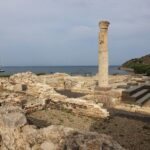
Nora is one of those sites where the details matter, and the guide is what turns scattered stones into a place you can picture. You’ll spend about 2 hours in the Area Archeologica di Nora, with admission included.
Here’s the kind of story you’ll walk through:
Nora’s port identity and why it grew
Nora begins in the Phoenician era (8th century BC) as a key commercial port. The location in the isthmus of Capo Pula helped ships set sail even with changing weather conditions. Later, under Punic rule, Nora developed fully in the 4th century BC and became a major urban center.
Then the Romans arrived in 238 BC and eventually Nora became a municipium in the 1st century AD. Nora reached its maximum splendor in the following centuries, with urban growth and an estimated 8,000 inhabitants. The site also served as a starting point for roads across the island—so this wasn’t just a coastal stop. It was a hub.
The excavations you’ll hear about at the start
Nora has a famous excavation backstory. A coastal storm helped reveal a Phoenician-Punic cemetery called the Tophet, and from there came major discoveries like the Temple of Tanit (a Carthaginian goddess) and the Nora Stone.
The Nora Stone is a standout detail for history lovers. On the stele, the name Shrdn (Sardinia) appears for the first time in the Western world. Even if inscriptions are not your thing, this is the moment where Nora stops being scenery and becomes a documentary.
Other Chia and southern beach tours in Sardinia




Thermal baths and the feel of the old streets
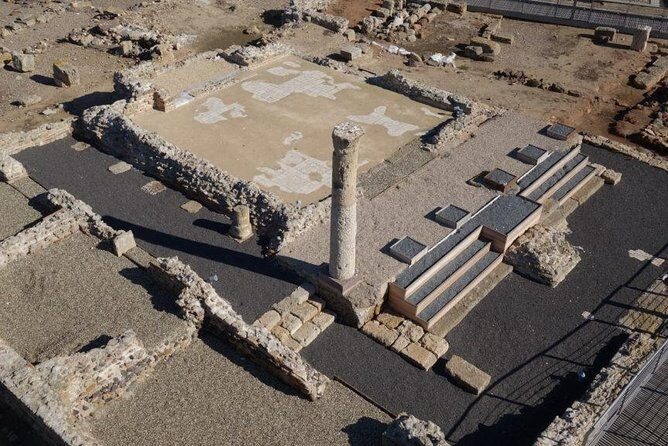
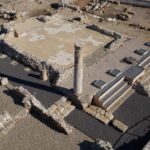
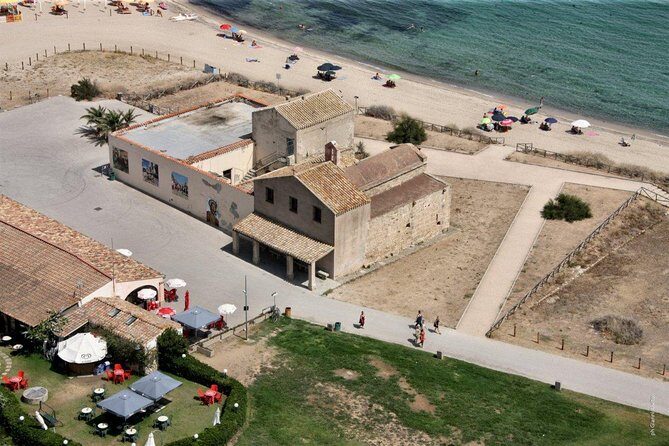
At the park entrance, you’ll see remains of the thermal baths that helped make Nora famous. Then the route moves through cobbled streets into the heart of the ancient town.
You’ll likely hear the names of key areas as you pass them:
- Piazza del Foro
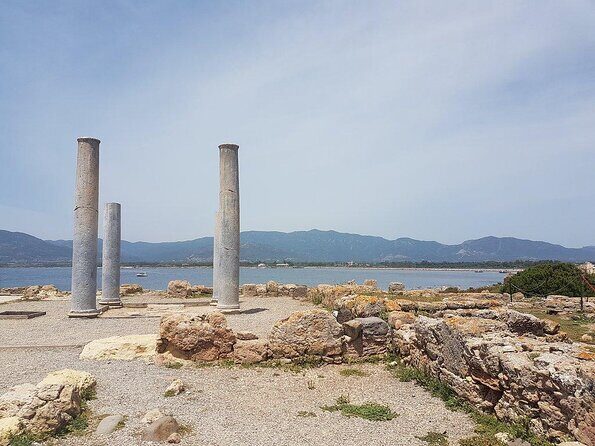
- A temple area with a six-column entrance hall (pronao)
- To the north, the necropolis and aqueduct
- Along the coast, the house of tetrastyle atrium (3rd century AD), including mosaic rooms
Don’t miss the mosaics (and yes, there’s a specific one)
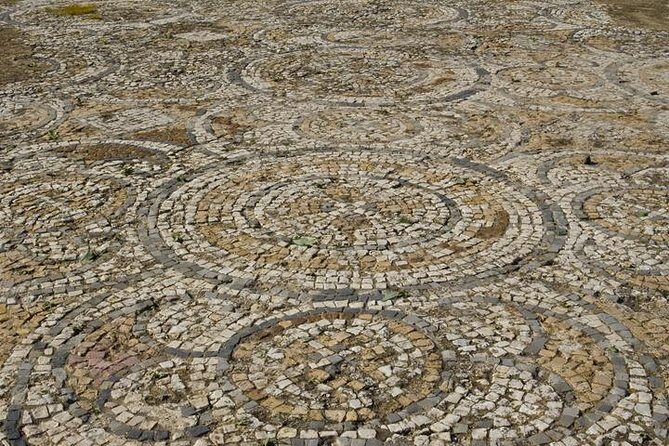
If you’re the type who likes art in context, Nora delivers. The house features mosaics, including one called Nereid on a marine centaur. Having a guide point out what you’re looking at makes the difference between seeing decoration and understanding how people lived and believed.
The amphitheater and what it’s used for now
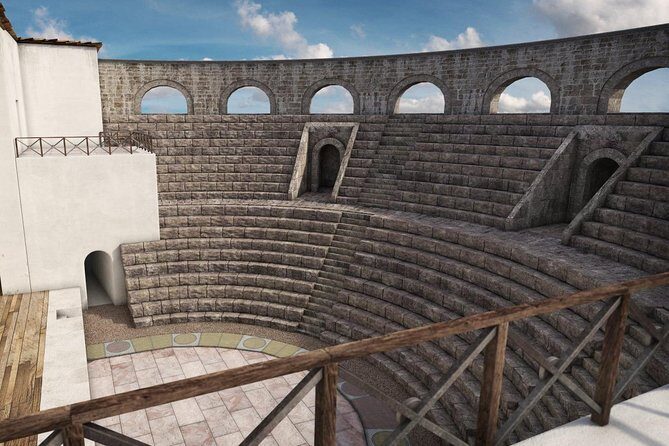
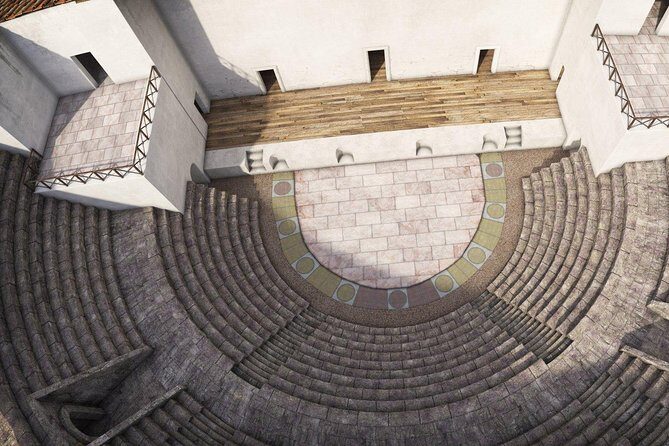
Nora’s amphitheater is one of the big visual moments. It was originally lined with marble, with around twenty terraces and seating for about 1,000 people. Today, it’s still used—hosting events like La Notte dei Poeti.
That contrast is what I like most. You’re not just looking at ruins. You’re seeing a place that still knows how to host people.
Sanctuary of Aesculapius: the last major stop
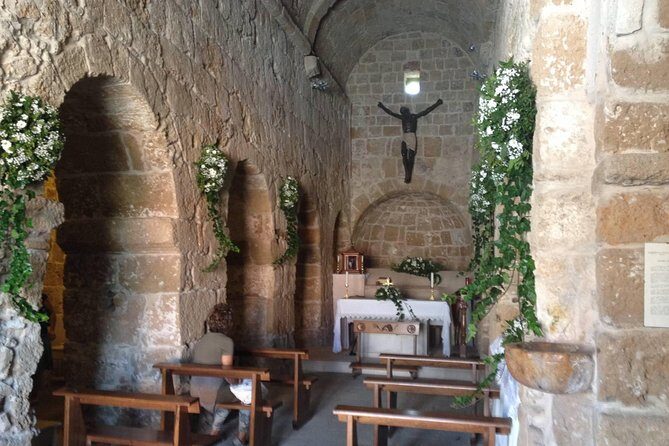
The final major building is the sanctuary of Aesculapius, marked by a mosaic-lined terraced from the 4th century AD. The guide connects it to possible incubation rituals—when people asked the gods for remedies.
Nora begins to decline in the 5th century, and this part of the walk helps you feel that shift. It’s the end of the story, physically.
A note on the coast and snorkeling pointers
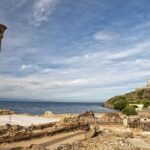
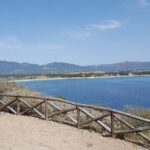
The tour description also mentions Punta del Coltellazzo, including the idea of seeing Roman roads and remains below the isthmus and going snorkeling. The walking part of your tour is at the archaeological park, so don’t assume you’ll bring snorkeling gear. But you can expect the guide to talk about the coast and what’s visible out there, which is useful if you’re already in “beach mode” and want to continue the exploration on your own.
Admission Priority: Why It Matters More Than You Think
Priority admission sounds like a small perk, but it changes the feel of the tour.
With standard entry, you can burn time before your guide even starts explaining the site. With priority entry, the day stays on rails: you enter, you walk, you learn, you move on while you still have your attention.
At a place like Nora—where the story spans multiple cultures—waiting around is more than annoying. It breaks the flow. This is why I’d call skip-the-line a real quality-of-life upgrade, especially if you’re pairing this trip with other stops.
Pula After Nora: Short, Sweet, and Very Real
After Nora, you’ll head to Pula for about 1 hour. This is not a long sightseeing marathon. It’s a chance to switch from ruins to real streets.
Pula is described as a hidden pocket of southern Sardinia with charming alleys and patrician homes. You’ll have time to:
- Browse craft shops for souvenirs
- Wander at your own pace
- If timing allows, consider popping into a traditional restaurant
This stop works well because Nora can feel heavy in the best way—history, inscriptions, and layered civilizations. Pula gives your brain a breather. It also helps you remember the day as a complete experience: ancient site in the morning, human town life afterward.
The Chia Return Stop: Closing the Loop
Your day ends with a brief stop back in Chia, about 20 minutes, with the guide assisting you and offering a few final anecdotes before returning you to your hotel area.
That short wrap-up matters more than it sounds. It turns the tour into a story with a beginning and an end, instead of feeling like a one-way transfer between places.
If you’re planning the rest of your evening, you’ll also find this practical. You can think about dinner plans, beach time, and how you want to pace your next day.
Price and Value: Is $479.41 a Good Deal?
The price is listed as $479.41 per group (up to 5), with a 4 to 5 hour duration.
For a private tour, that price becomes easier to justify when you compare it to the real costs you’d otherwise pay in two areas:
1) Time and logistics. Private pickup from Chia and Domus de Maria means fewer headaches and less wasted transit.
2) Guide attention. You’re not sharing the ruins with a crowd. Your pace can be adjusted, and the guide can spend more time making sure the major parts of Nora land with you.
You’ll also get several included items that reduce “nickel-and-diming”:
- Admission tickets for the Nora site
- Skip-the-line priority
- Tickets included overall
- Bottled water
- Air-conditioned minivan with free Wi‑Fi service due to availability
In plain terms: if you’re traveling with 3–5 people, this private format can feel like a strong value. If you’re traveling solo or as a couple, it may be best if you want a more controlled day rather than a budget group tour.
One detail I like from the tour feedback: the guide role can make or break the experience. I’ve seen praise for Ricardo, described as both knowledgeable and attentive, and that kind of guide energy is exactly what turns Nora from an outdoor classroom into a story you can walk through comfortably.
What to Pack and How to Get the Most From the Walk
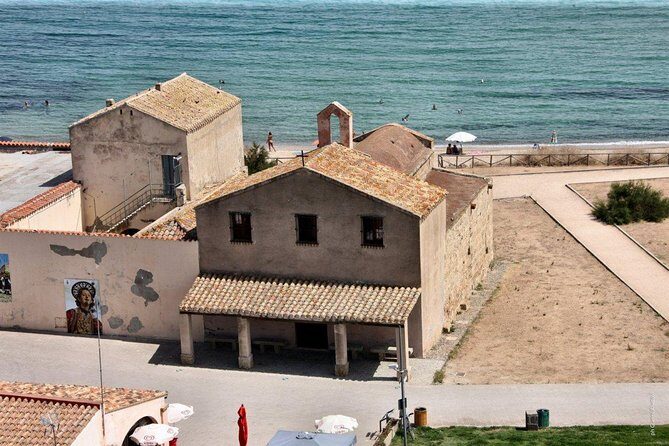
You’ll be on foot in an archaeological setting. Nothing is listed as strenuous, but practical planning pays off.
Bring:
- Comfortable walking shoes (uneven ground happens at sites like this)
- Sun protection (you’re near the coast and you’ll be outside)
- Water in case you want extra beyond what’s included
If you care about photos, remember that Nora’s best moments are tied to specific structures—amphitheater sightlines, mosaic details, and plaza views. Priority entry helps you get there without delay, so you’re not scrambling when the light changes.
Who This Tour Suits Best
This private experience is a great match if:
- You’re staying in Chia or Domus de Maria
- You want a guided Nora walk without losing time at entrances
- You like history that has a clear thread (Phoenician → Punic → Roman)
- You’re traveling in a small group (up to 5) and want a calmer pace
It’s also a good option if you’re mixing archaeology with everyday vacation time. The day includes Pula and ends with a Chia return, so it doesn’t feel like you traveled just to watch ruins go by.
You might want to rethink the plan if you have limited mobility or you strongly prefer minimal walking. The tour is private and flexible in tone, but the core value is the walk through the site.
Should You Book This Nora Experience?
I’d book this when you want Nora to feel like a guided experience, not a self-guided scavenger hunt. The combination of priority admission, a structured walkthrough of the key areas, and a follow-up in Pula is a solid use of a half day.
It also makes sense if you’re with friends or family and want one vehicle, one guide, and a day that stays on schedule. At $479.41 per group, the value climbs as your group size rises—especially when you factor in included admission and the “no wasted time at the gate” advantage.
If your main goal is just to see Nora quickly with minimal guidance, a cheaper option could work. But if you want Nora’s layers explained in an understandable way while you’re standing in the right spot, this private format is one of the more satisfying approaches from Chia.
FAQ
How long is the Nora archaeological site private experience?
The tour lasts about 4 to 5 hours.
What’s included in the tour?
It includes bottled water, pickup/drop-off for the Domus de Maria and Chia area, skip-the-line priority admission, a private tour format, transport in an air-conditioned minivan (Wi‑Fi service due to availability), and tickets.
Is the admission ticket included?
Yes. Admission for the Area Archeologica di Nora is included.
Do you offer pickup from hotels?
Yes, pickup/drop-off is offered for hotels in the Domus de Maria and Chia area.
Where does the tour start and end?
The meeting point is Viale del Porto, 13, 09010 Chia SU, Italy, and the activity ends back at the meeting point.
Is this tour private?
Yes. It’s a private tour/activity, with only your group participating.
What group size is this priced for?
The price is per group up to 5 people.
What language is the tour offered in?
The tour is offered in English.
Is there Wi‑Fi on the transport?
Wi‑Fi service is available for free, due to availability.
Is the tour canceled if it rains?
The excursion will not be cancelled and refunds will not be issued because it rains.