REVIEW · SARDINIA
Excursion to the Nuraghe Su Nuraxi of Barumini from Cagliari
Book on Viator →Operated by Secrets of Sardinia · Bookable on Viator
Nuraghe day trips feel like a shortcut through time. This one mixes Su Nuraxi’s stunning pre-Roman fortress with quick, smart stops that explain what shaped Sardinia before Rome. You get a tight plan, guided time where it counts, and small-group energy (max 8).
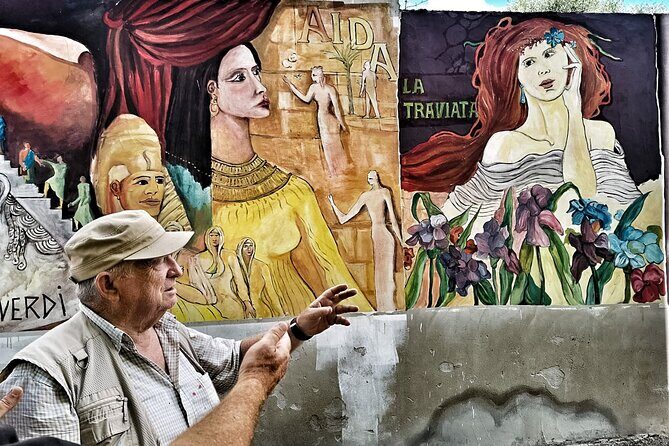
I especially liked the way the Su Nuraxi keep is explained as a real defensive system, not a random pile of stones. The tour also stops long enough to break up the drive with local culture—like murals in Villamar and a very well-preserved giant tomb on the Giara of Siddi.
One thing to weigh: the schedule is efficient. The core is a guided visit to Su Nuraxi, so if you’re hoping for extra time beyond that (like more museum time), you’ll likely feel a bit rushed.
In This Review
- Key highlights if you only read one section
- The drive from Cagliari: why the route matters as much as the site
- Price and value: what your $81.71 really covers (and what it doesn’t)
- Stop for wine-press history: Sardinia’s long food-and-trade story
- Mining in Sardinia: gold, power, and why empires wanted this island
- Villamar in Piazza del Arte: murals, a drink stop, and quick reset time
- Las Plassas medieval castle: a brief look at a later layer
- Su Nuraxi at Barumini: what the UNESCO guided visit really gives you
- What makes Su Nuraxi special (and why you should listen)
- The physical reality: walking, stairs, and close-quarters spaces
- What you should not expect
- Ancient olive trees and saffron: the small village details that make the visit feel local
- Sa Domu e S’Orcu giant tomb: a short visit with a big presence
- Best way to handle the short timing
- Su Nuraxi tour logistics that affect your comfort
- Who should book this Nuraghe day trip (and who might not)
- Should you book this trip from Cagliari?
- FAQ
- How long is the excursion to Su Nuraxi of Barumini from Cagliari?
- What time does the tour start, and where do we meet?
- Is the Su Nuraxi entrance fee included in the price?
- What’s included in the tour price?
- Are there restrooms and a chance to get a drink?
- What language is the guided experience offered in?
- What happens if weather is bad?
Key highlights if you only read one section
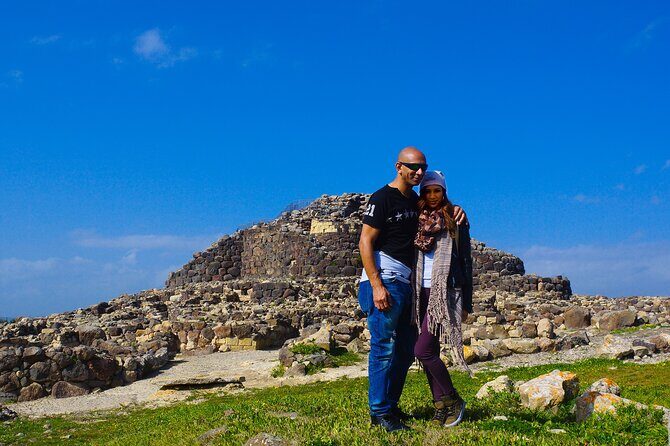
- Su Nuraxi fortress mechanics, made clear: you’ll hear how the complex protected water access and supported daily storage and movement.
- Small group (up to 8) with language-sorted guidance: you don’t spend the whole day trying to follow multiple explanations at once.
- Quick cultural stops that add context: wine press history, Sardinian gold mining, and a medieval castle stop keep the day from feeling like “just transport.”
- Villamar’s Piazza del Arte stop: short, useful breathing room plus murals worth spotting.
- Sa Domu e S’Orcu giant tomb on the Giara of Siddi: a compact visit to a site that’s unusually well preserved.
- Entrance to Su Nuraxi is extra: €15 per person is not included, so plan your total budget.
The drive from Cagliari: why the route matters as much as the site
This excursion runs from Cagliari in the morning, starting at 9:00 am from the Beachtours | Secrets of Sardinia meeting point at Largo Carlo Felice, 76. The ride is in a small, air-conditioned minivan, which I really appreciate on Sardinia’s warmer days (and it keeps the logistics painless when you’re not renting a car).
You should expect a day that’s built around time on-site, not time in traffic. The driver/guide adds explanations along the way, so by the time you reach Barumini you’re not just looking at the Nuraghe—you understand why people built like this. That context changes your whole experience. Instead of “cool stones,” you start seeing engineering choices: defense, water, storage, and control of access.
The day is also short enough that you can fit it into a Cagliari itinerary without giving up your whole afternoon. Duration is about 4 hours total, so it’s a smart move if you want history without turning your day into a full retreat.
Other Cagliari tours and city experiences in Sardinia
Price and value: what your $81.71 really covers (and what it doesn’t)
The headline price is $81.71 per person, and it covers the essentials: transport plus a driver/guide. It’s a fair deal for a guided half-day out of Cagliari, especially with the small group size and the amount of “meaning” added in-route.
But here’s the key budgeting point: Su Nuraxi’s entrance fee is not included. You’ll pay €15.00 per person for the guided site entry. So your real total is more like the tour price plus that €15.
If you do the math, the value hinges on one thing: your interest in guided interpretation. If you love understanding how old sites worked, you’ll feel like you got your money’s worth. If you mainly want to wander and take pictures, you might feel like the price is more than you’d pay for self-guided touring. This is still a good tour—just know what style you’re buying: guided, structured, and efficient.
Stop for wine-press history: Sardinia’s long food-and-trade story
Before you reach Barumini, you get a stop that focuses on the oldest wine press in the Mediterranean and how Sardinia’s wine production developed. Even if you don’t think of wine as “ancient engineering,” it is. Pressing grapes is infrastructure: materials, labor, seasonal rhythms, and trade.
This part of the tour works for two types of travelers:
- If you like history that connects to daily life, you’ll like how food tech shows up in archaeology.
- If you’re a casual visitor, you’ll still get something concrete—how people harvested and processed something valuable.
The time here is meant to be a pause with payoff, not a full detour. So don’t expect a deep winery lecture. Do expect a clearer sense of what the island produced and why it mattered.
Mining in Sardinia: gold, power, and why empires wanted this island
Next comes a topic that explains Sardinia in a very different way: gold mining and mining in Sardinia. This is one of those “wait, that makes sense” moments. Once you hear about extraction and wealth, it’s easier to understand why certain sites were important, and why control of resources showed up in politics and building choices.
You don’t have to be a geology person for this to land. The guide frames mining as part of the island’s story of work, wealth, and outside attention. And for Nuraghe history, that matters. It’s hard to imagine a fortress culture without thinking about what it protected—routes, people, and valuable goods.
Villamar in Piazza del Arte: murals, a drink stop, and quick reset time
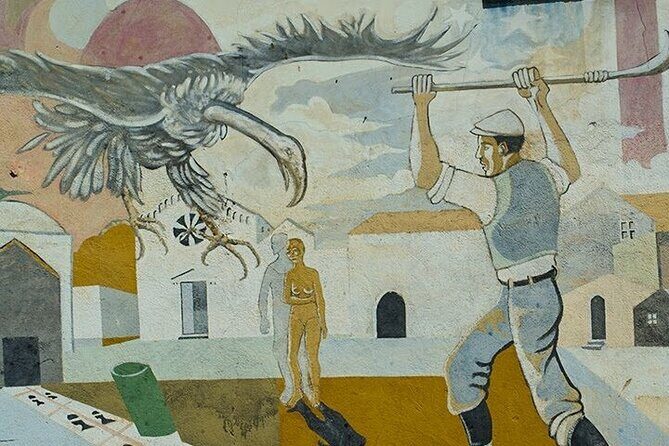
One of the practical joys of this tour is the stop in Villamar, at Piazza del Arte. It’s only about 10 minutes, but it’s designed like a useful reset. You can grab a drink and use the facilities, and the guide also points out the most beautiful murals in the piazza.
This is where you’ll feel the tour’s “small but thoughtful” style. Instead of skipping local life, they give you a quick taste of everyday Sardinian town character. Plus, a short break keeps energy up for the main site.
If you’re the type who hates “standing around on tours,” Villamar is at least the kind of stop where you can actually do something: refuel, stretch, and look up close at the art before moving on.
Other Nuraghe and Su Nuraxi tours in Sardinia
Las Plassas medieval castle: a brief look at a later layer
The itinerary includes information about the medieval castle of Las Plassas. Since the schedule is tight, this is not a long wander around battlements. Think of it as a historical bridge: you’re moving from pre-Roman stone fortresses toward the later medieval world that also used Sardinia’s height and defensible thinking.
Even a short mention can be helpful. Nuraghe sites are often treated like a separate chapter of history, but the island stayed strategically valuable long after. So Las Plassas gives you a sense of continuity: defense and control didn’t vanish—it changed.
Su Nuraxi at Barumini: what the UNESCO guided visit really gives you
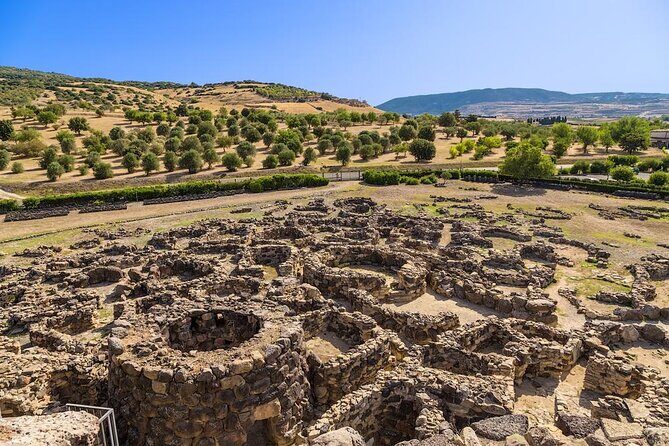
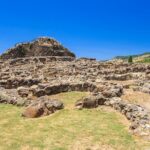
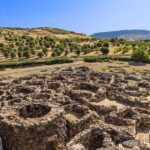
Now for the main event: Su Nuraxi, the famous UNESCO World Heritage Site in Barumini. This is the part you should build your expectations around, because it’s where the tour spends its real guided time: about 1 hour 10 minutes.
Your entry ticket to the site is not included. You’ll pay the €15 entrance fee for admission.
What makes Su Nuraxi special (and why you should listen)
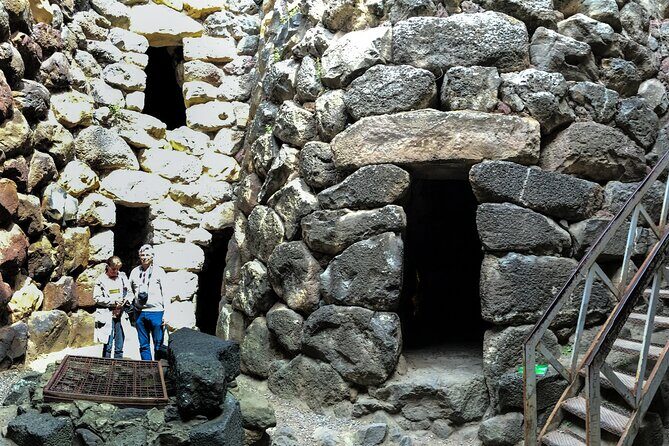
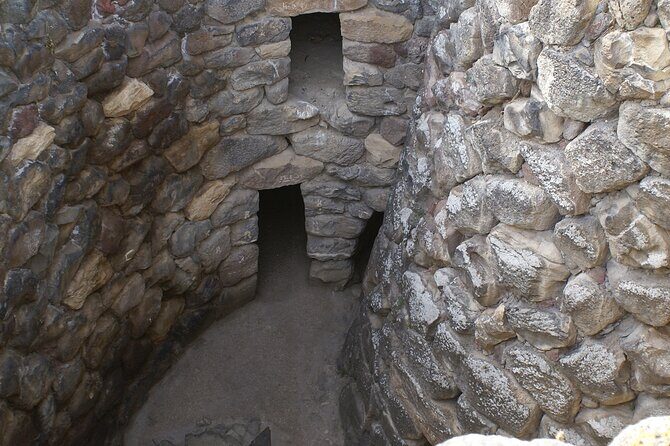
Su Nuraxi isn’t just “big stones.” The guided explanation helps you see it as a functioning defensive complex. One of the standout ideas you’ll hear is about the central keep: it’s described as a double-walled structure designed to support hidden movement and protection.
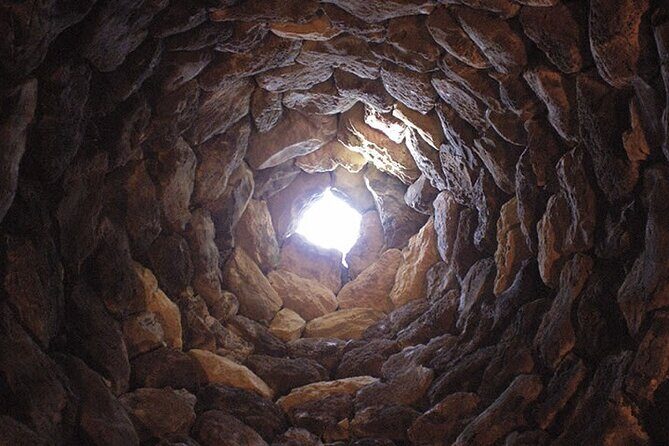
You’ll also learn how the keep related to storage and water access. A highlight is the idea of access to water via an underground stream, which is the kind of detail that makes a fortress feel real. It’s easy to assume defensive sites are about fighting. This pushes you to see defense as also about surviving.
And because it’s part of a network of fortifications, the guide ties what you see into a bigger system. Even without doing a deep hike, you’ll come away with a stronger sense of why these sites were built where they were.
The physical reality: walking, stairs, and close-quarters spaces
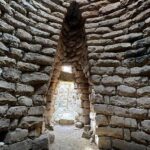
From the viewpoint of comfort, expect some walking and narrow stairs in parts. This isn’t a museum-floor stroll. If you have mobility concerns, plan for tight spaces and uneven movement.
The upside is that narrow paths and stairways help you imagine daily movement inside the structure. It’s one reason the site feels dramatic even in a short time slot.
What you should not expect
This is where the “tight schedule” comes in. The tour focuses on the guided visit to the UNESCO complex. There isn’t time in the flow to treat this like a multiple-hour museum day. If you’re the kind of visitor who likes to linger for extra exhibits after the main tour, you might feel the time constraints.
Still, if you enjoy getting the key story fast and then letting the stones do the talking, the format works.
Ancient olive trees and saffron: the small village details that make the visit feel local
Along the way around the Nuraghe area, you’ll have a chance to notice ancient olive trees and hear about the village’s reputation for excellent saffron. This isn’t a lecture you’ll write a report about, but it helps you connect archaeology to the living island.
For me, this kind of stop matters because it changes the mood. You’re not treating the past like something dead behind glass. You’re seeing how people still farm, still value labor, and still make products that travel.
If you like food souvenirs that aren’t mass-produced, saffron is the kind of thing you might want to ask about during the day—though the tour itself is focused on the sites, so shopping time depends on what’s available on-site and your personal pace.
Sa Domu e S’Orcu giant tomb: a short visit with a big presence
The final major stop is Tomba dei giganti Sa Domu e S’Orcu. It’s listed as 15 minutes with admission not required for this stop.
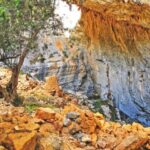
This is the “giant tomb” type of site: a massive ancient structure built for communal burial, and in this case it’s described as very well preserved. It sits on the Giara of Siddi, which adds a sense of place. Even with limited time, the scale and the condition are the message.
What I like about this stop is that it gives you contrast. Nuraghe Su Nuraxi shows defensive architecture. Sa Domu e S’Orcu shows how people invested in ritual and memory. Together, they round out the day: protection and belief, both built in stone.
Best way to handle the short timing
Fifteen minutes goes fast, especially if you want photos and also want to understand what you’re seeing. I recommend you focus on one or two angles of the structure rather than trying to capture everything. If you do that, you’ll remember the site more than the shot you got.
Su Nuraxi tour logistics that affect your comfort
A few practical notes make the day smoother:
- Group size is capped at 8 travelers. That usually keeps it easier to hear the guide and manage movement through tighter areas.
- Mobile ticket is used, so you’ll want your phone charged enough to pull it up.
- The tour is offered in English, and the operation may sort the group by language when multiple languages are on the bus, so you’re not listening to everything twice.
Most importantly: bring the right expectations for a half-day. This is a “see a lot, learn a lot, move on” day. Wear shoes for stairs and narrow turns. Bring water, but know the tour does not include food and drinks.
Who should book this Nuraghe day trip (and who might not)
I think this tour is ideal if you:
- Want a guided introduction to pre-Roman Sardinia in a short window
- Like understanding how stone structures were engineered for real needs (water, defense, storage)
- Prefer a small group over big-bus crowds
It may not be ideal if you:
- Want a long, self-paced archaeological wander
- Plan to spend extra time in on-site rooms beyond the guided program
- Need a very low-stairs experience
If you’re visiting Cagliari and you want one high-impact countryside outing, this is a strong candidate.
Should you book this trip from Cagliari?
Yes—if you want a focused, guided look at Su Nuraxi and you’re happy with a structured half-day. The ticket price makes sense when you value transport plus interpretation, and the Su Nuraxi portion is the kind of site where having the story explained changes everything.
If you’re more of a slow museum linger type, consider pairing this tour with a bit of extra time elsewhere on your own. But for most people—especially first-timers to Barumini—this hits the right balance of learning + real-world site time without turning the day into a grind.
FAQ
How long is the excursion to Su Nuraxi of Barumini from Cagliari?
The tour duration is approximately 4 hours.
What time does the tour start, and where do we meet?
It starts at 9:00 am. The meeting point is Beachtours | Secrets of Sardinia, Largo Carlo Felice, 76, 09124 Cagliari.
Is the Su Nuraxi entrance fee included in the price?
No. Su Nuraxi entrance is not included, and the fee is €15.00 per person.
What’s included in the tour price?
Included are the driver/guide and transport by air-conditioned minivan.
Are there restrooms and a chance to get a drink?
Yes. There’s a short stop in Villamar at Piazza del Arte where you can have a drink and use hygienic facilities.
What language is the guided experience offered in?
It is offered in English. If there are multiple languages on board, the group may be divided by language so each person can follow the guide.
What happens if weather is bad?
The experience requires good weather. If it’s canceled due to poor weather, you’ll be offered a different date or a full refund.